10
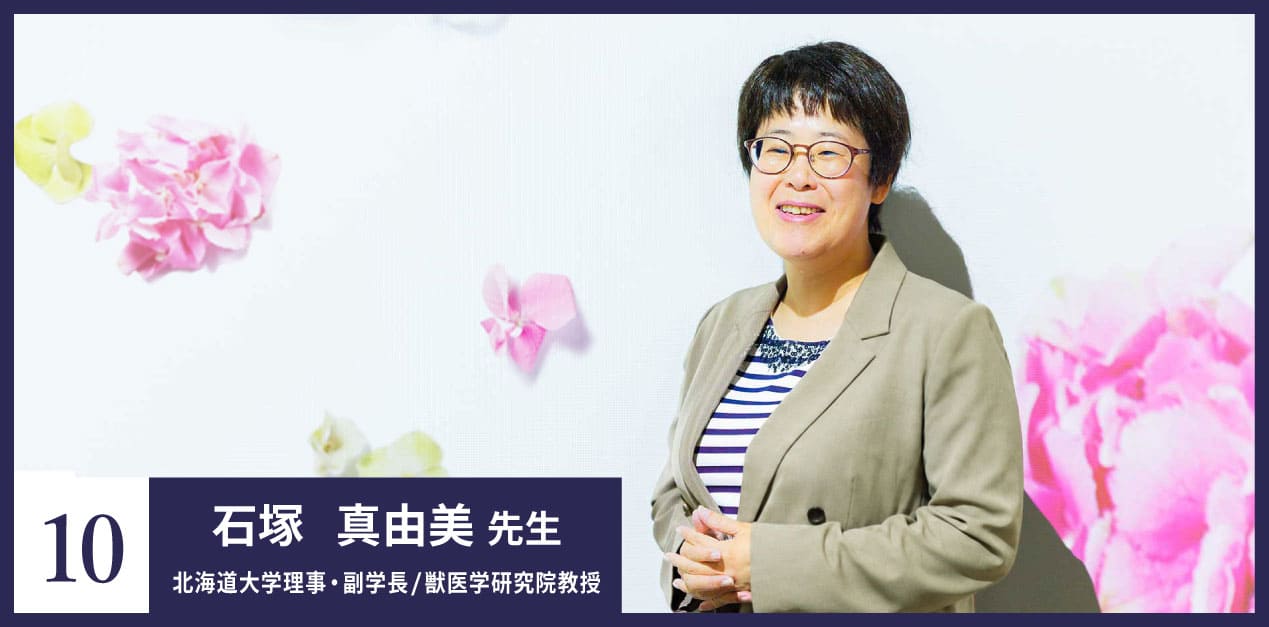
- Mayumi Ishizuka
- Executive Director and Vice President of Hokkaido University
Professor, Faculty of Veterinary Medicine
A mix of diverse backgrounds,
We can bring out the best in each other.
A flexible organization is what truly generates strength.
LILAS
Leaders for people with innovation,
Liberty and Ambitions.
A series of interviews with female researchers introducing leading female leaders who are at the forefront of their fields.LILASLilac means lilac in French, and is also known as the flower of Sapporo. Along with plant arrangements inspired by the interview content, we will be sharing this original interview series, conveying messages about the strength, flexibility, and diversity that plants possess.
- 10
-
The tenth installment features Mayumi Ishizuka from the Graduate School of Veterinary Medicine. As a toxicologist, Ms. Ishizuka has led international and interdisciplinary projects, including environmental pollution research in Zambia. She is the first female professor in the Faculty of Veterinary Medicine and currently holds the important responsibility of managing the university as a board member and vice president. Ms. Ishizuka, who says, "I want you to aim for higher positions in order to realize what you want to do," shared her policies for managing her department, the joys of interdisciplinary collaboration, and her message to the next generation.
Fostering independence is the foundation of education.
The reason the professor became involved in the management of the research lab was
Since when?
I joined Hokkaido University as an assistant professor in 2000.
At the time, I was called an "assistant," but that's where my career as a researcher began. I took on the position of "professor," which involves managing an entire department, in 2010.
As job titles change,
What changes have occurred in management?
I feel that the roles and perspectives required differ at each stage. As an assistant professor, I prioritized working alongside students, conducting experiments and taking action at their level, as I was in the position closest to them. As an associate professor, I needed to consider the management of our lab and the organization's structure from a slightly broader perspective. And as a full professor, I had to elevate my perspective even further.
We are now required to manage our classrooms with a broader perspective, considering not only what matters in our own classroom, but also the role and position that our classrooms should play within the university and in society as a whole.
In running a research laboratory,
What is your most important policy?
There's a rule I've consistently followed since my days as an assistant professor: Instead of faculty deciding on research topics, students are first asked to propose their own. It might be quicker and more efficient to assign students a portion of a large research project I'm working on, in terms of producing papers and achieving results. However, I don't want to treat students as mere "cogs" in a research machine.
So, it's about students choosing what they want to do.
What specific steps are you taking?
Every year, when students join our lab, we begin by asking them what they want to do. Even if their proposal involves research on organisms that are difficult to sample in Japan, if the student has a strong will, we will make arrangements to make it happen, such as contacting overseas research labs. We believe that fostering this "autonomy"—planning and pursuing what you want to do yourself—is the foundation of education. Currently, our lab has many international students, and regardless of nationality, a culture of proactive research is firmly established among doctoral students, who even develop their own research proposals.
Forming a team with professors from other departments dramatically increased the activity of my research.
Professor Ishizuka is known for his impressive interdisciplinary research, including his studies on environmental pollution in Zambia.
What prompted you to take the first step towards collaborating with other fields?
Actually, it all started with a question from a student. As toxicology experts, we investigated environmental pollution in Zambia and pointed out things like, "This area is contaminated," or "You shouldn't eat this animal." However, when the local people asked us, "So, what should we do?", we couldn't offer concrete solutions based solely on our veterinary knowledge. That's when a student asked us, "Does the research we're doing have any meaning?" So, we thought that if we didn't have the answer ourselves, we should seek help from experts in other fields.
That's when the "crossing of boundaries" into completely different fields, such as engineering and economics, began.
Until I was an associate professor, my collaborative research mainly involved taking just "half a step" outside my own territory, but after becoming a professor, I started to completely step outside my territory. I would suddenly contact professors in the Faculty of Engineering whom I didn't know and say, "I want to do something like this; would you be willing to give me some advice?" I just kept making contact. Fortunately, Hokkaido University is a comprehensive university.
By forming a team with professors from other departments, we received insightful solutions from perspectives outside our own specialties, dramatically revitalizing our research. Once we experienced the excitement of this "crossing boundaries," the barriers within the research lab also became lower. Now, students readily utilize external networks and seek out different fields to learn experimental methods, creating a truly open research environment.
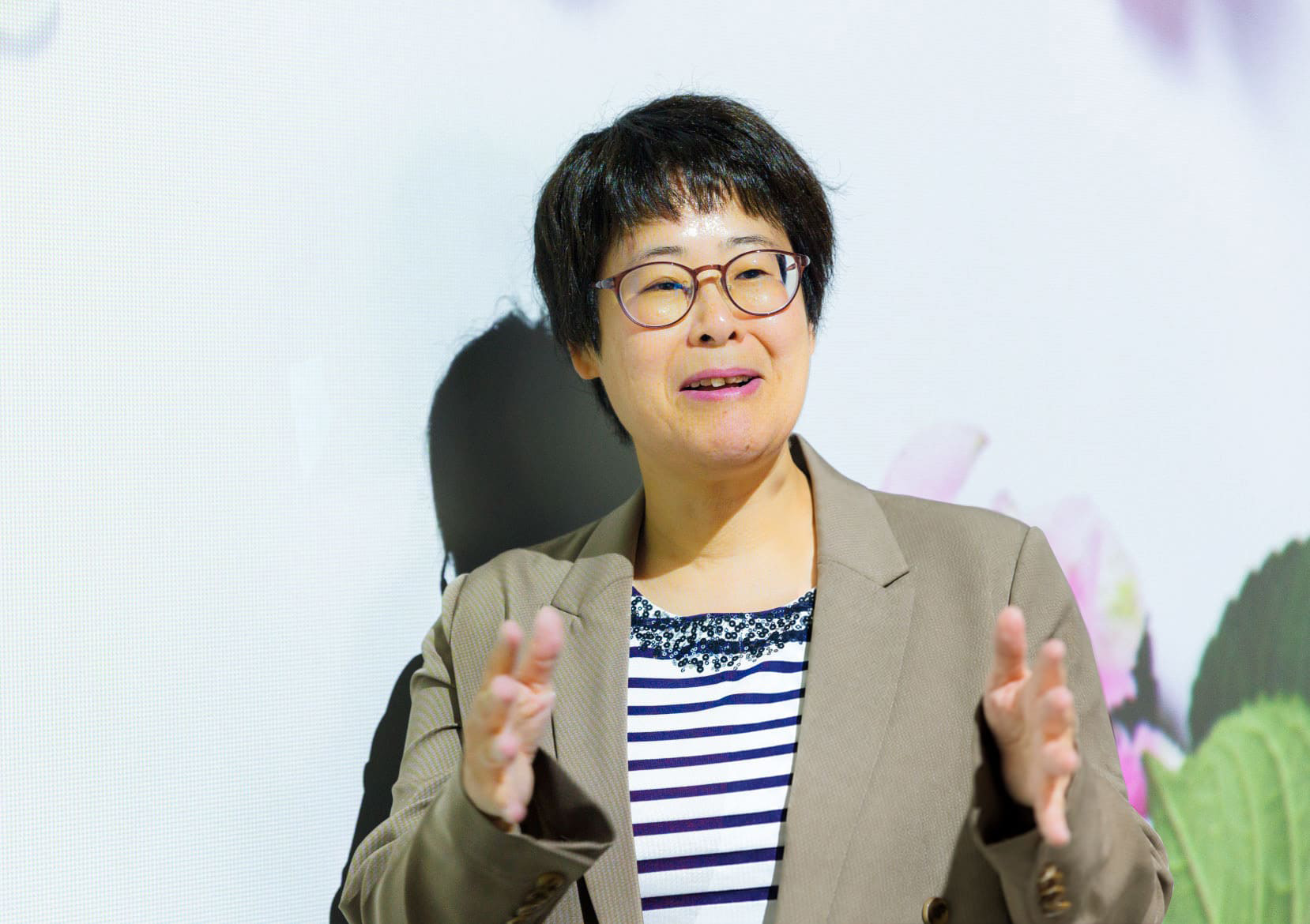
Natural diversity,
Words of wisdom from our predecessors
As the first female professor in the Faculty of Veterinary Medicine,
Have you ever experienced any difficulties?
It may surprise you, but I hardly recall ever experiencing friction or feeling like I was being a woman because of my career progression. Rather, the words my previous professor gave me when he retired—"When you become a professor, you'll be called to all sorts of meetings and you'll be busy. But don't refuse when you're asked"—are what support me today. In fact, just as he predicted, I have been entrusted with important responsibilities such as serving on various committees and boards within the university, but I have faithfully followed his advice and accepted the roles I have been given. I feel that accepting these roles has opened up new paths for me.
What are your thoughts on diversity?
I feel a sense of urgency that we must not fall into the trap of "simply having diversity" as a numerical target. The ideal environment is like an "ecosystem" where people of different genders, international students, and people from diverse backgrounds can respect each other.
Our research lab has periods where there are many women, periods where it's all men, and periods where international students make up the majority. We believe that a flexible organization where such diverse backgrounds blend together and bring out the best in each other is what creates true strength.
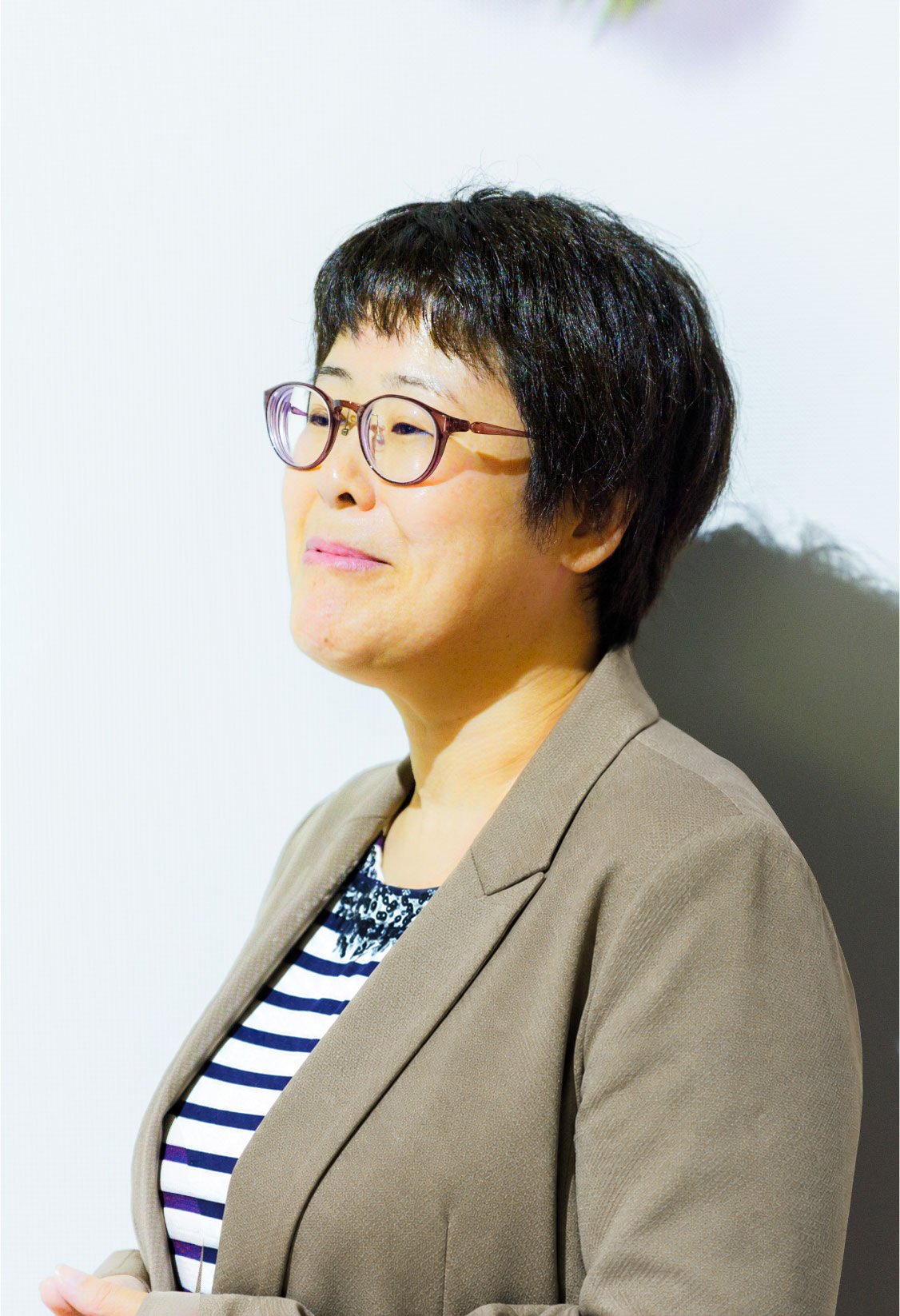
"Excellence" and "Extension"
Aiming for fusion
As a researcher and as someone involved in university administration,
Please tell us about your vision for the future.
Currently, Hokkaido University has two main pillars: "Excellence (outstanding research)" and "Extension (contribution to society)." I would like my research to fall somewhere in between these two.
While pursuing outstanding research, we are committed to giving back to society. A symbolic example of this is the endowed chair in "Forensic Veterinary Medicine" (animal forensic medicine), established in April 2025. It investigates the causes of suspicious animal deaths and, in cooperation with the police, provides evidence to solve cases. This is cutting-edge science, yet it directly contributes to upholding social justice.
I want to continue pursuing these kinds of ambitious goals.
Regarding university management, what kind of university do you aim to create?
Ultimately, our goal is to create a university that students want to attend. To achieve this, it's essential to have an environment where professors can pursue their dreams and enjoy their research with enthusiasm. I believe that a university should be a place where individual professors can maximize their dreams.
If teachers are free and uninhibited in their activities, students will naturally follow suit.
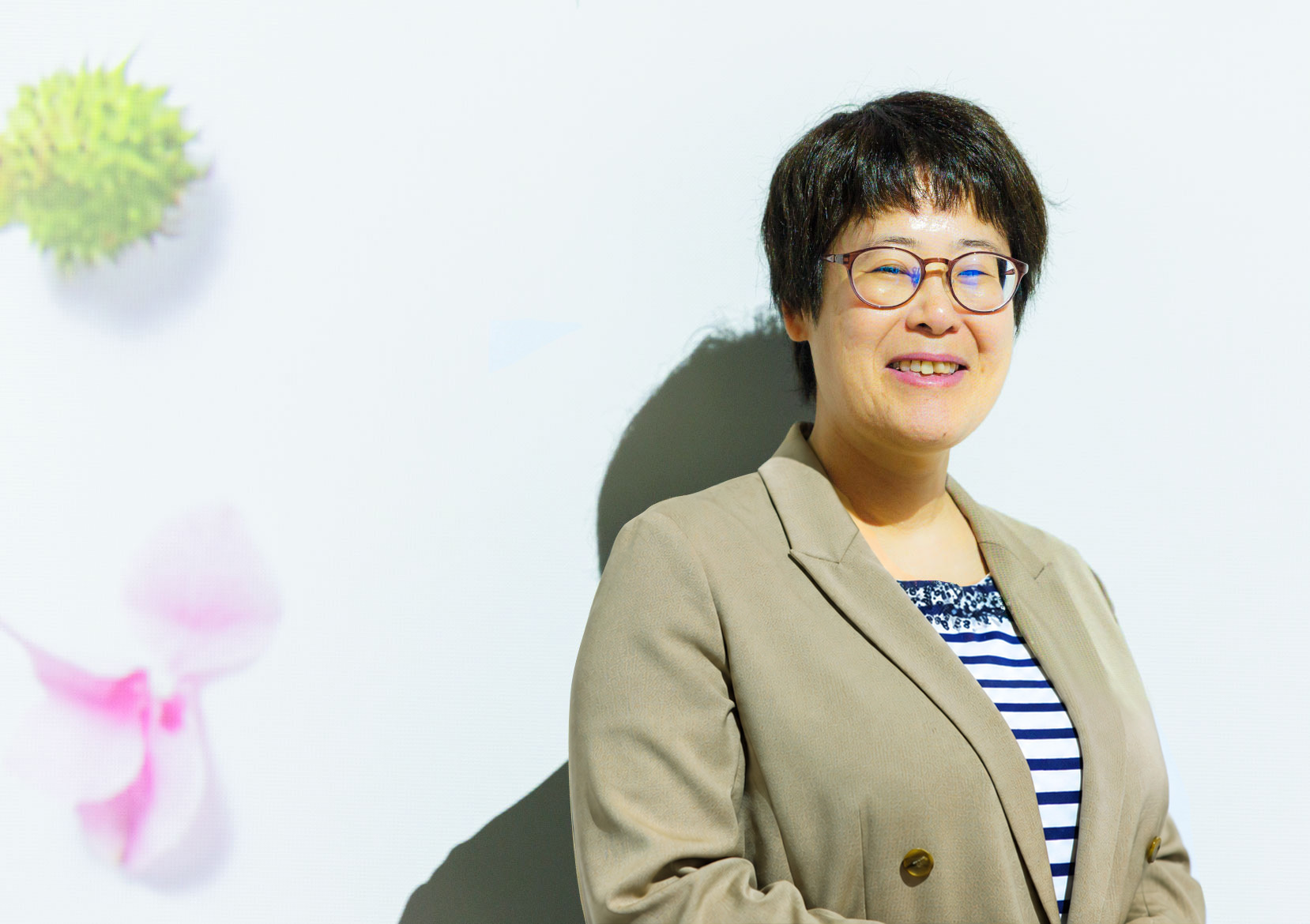
The ability to bring a vision to life is
An irreplaceable joy
Please give a message to young researchers who aspire to higher positions.
While it's true that higher-level positions bring increased responsibility and responsibilities, the scope for realizing your own goals expands dramatically.
When I was an associate professor, there was a time when I was hesitant, thinking, "Becoming a professor seems like a lot of work." However, once I actually reached that position, I realized that I could build my ideal lab and bring my vision to life on my own responsibility. I find an unparalleled joy in achieving things through my own efforts. If you have a future you want to realize, I encourage you to challenge yourself without fear. If you have the determination to "do whatever it takes to achieve what you want," a path will surely open up for you. Beyond that, a wonderful view that only you can see will unfold before you.
LILAS
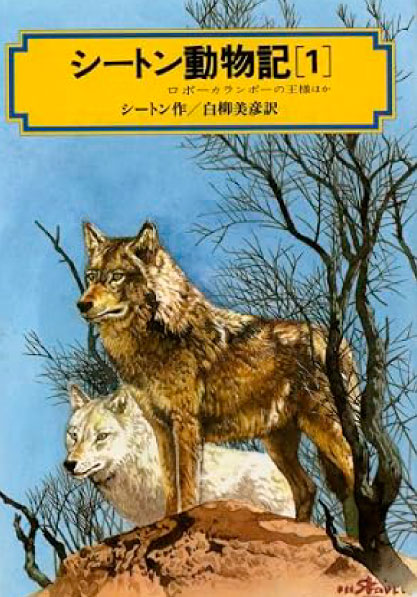
Library
"These are books I was engrossed in as a child. I was captivated by the mysteries of animal and insect behavior, and I admired Seton and Fabre as they meticulously observed them and unraveled the mysteries. Looking back, I think they were the starting point for my current research."

LILAS
Plants
Plants that can be both poison and medicine. From the explorations of Seishu Hanaoka and many others to the present day. Pink hydrangeas, a collection of flowers that Ms. Ishizuka has come to appreciate since becoming an adult.
The name hydrangea is
Aji → "to gather", Sai → "true indigo (sai)" = deep indigo color.
That's one theory.

-
Datura (Korean stramonium)
Scientific name: Datura metel Family and genus: Solanaceae, Datura
- It is highly toxic. When it was first introduced to Japan, it was believed to have medicinal properties.
-
Hydrangea
Scientific name: Hydrangea Family and genus: Hydrangeaceae, Hydrangea
- Some are toxic. They also have medicinal properties and are used as a treatment for malaria.
LILASThis is part of the Hokkaido University 150th Anniversary Project. Hokkaido University will celebrate its 150th anniversary in 2026.