
Part 4: Preconception, Pregnancy, Childbirth, and Welfare Benefits

Regarding careers and reproductive health/rights,
I'd like to think about this together with the members who gather at CAFE Ebi.
Ebi-sensei: The owner of CAFE EBI.
She changed careers from being an obstetrician and gynecologist to opening her long-desired coffee shop.
I enjoy chatting with my partner, Kani-san, whom I call "wife," and with customers.
Kani-san: Kitchen leader at CAFE EBI.
Originally, he was a researcher in a field completely unrelated to food,
I wanted to provide delicious food, so I changed careers with Ebi-sensei.
Macchan: A regular customer at CAFE EBI. Works as a researcher in a lab. Sho-kun is his partner.
Lately, I've been hearing a lot of reports about life events from my classmates.
I am conscious of my life and career plan.
Sho-kun: A regular customer at CAFE EBI. He works as a researcher in a lab. Macchan is his partner.
I learned about the concept of reproductive health/rights from Professor Ebi.
Studying.
*All characters are fictional.
Take home message
TOPIC
Morning sickness, hyperemesis gravidarum / Second trimester / Premature birth / Gestational hypertension / Anemia during pregnancy / Childbirth and postpartum care / Minor troubles during pregnancy

Today, a junior colleague at work told me she's pregnant. I'd heard from her a while ago that she was pregnant, but she'd only told a select few at work because she didn't know what might happen. She didn't like being treated with such caution. That being said, our workplace involves a lot of experimentation, so I've been thinking lately about how to balance a safe and secure pregnancy with work... what kinds of experiments are okay to ask her to do, and what should be avoided.

A senior colleague whose partner recently gave birth told me that it's a good idea to review the employee benefits available during life events like pregnancy and childbirth, even if you're not planning on experiencing them yourself. That's true, it's important because colleagues, seniors, or juniors like Macchan might experience these things, right?

That's right, I've never looked into it!

So, today I'd like to talk to you two about pregnancy and childbirth.
How pregnancy works
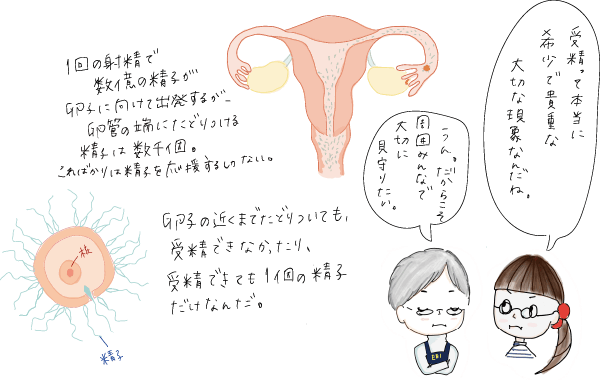
The fact that "the mechanism of pregnancy works perfectly" is precious, and in a sense, rare.
An egg, developed in a woman's ovary, is released once a month and transported to the fallopian tube. Healthy sperm produced in a man's testes meet the egg at the right time, fertilization occurs, and the fertilized egg implants in the uterine lining, resulting in pregnancy. Pregnancy cannot occur unless all these organs work together perfectly. It is truly an amazing system.

When does a pregnancy test show a "positive" result?
Pregnancy tests detect a hormone called human chorionic gonadotropin (hCG), which is secreted by the part of the uterus that later becomes the placenta. In women with regular menstrual cycles, a positive result is often obtained around the time of their expected period. However, there is also a possibility of ectopic pregnancy (a condition where the fertilized egg implants and develops outside the uterine cavity, requiring surgery, etc.), so if a commercially available pregnancy test is positive, it is best to see an obstetrician/gynecologist.
So, a pregnancy test alone doesn't guarantee a definitive diagnosis.
It's true that at this stage, an ultrasound might not show any clear signs of pregnancy, but it's reassuring to keep an eye on it. Eventually, the space where the baby will reside (the gestational sac), the baby itself, and the heartbeat will become visible, and the due date will be determined. This is also around the time you'll go to the local government office to register your pregnancy and receive your maternal and child health handbook.
I wonder if I can feel a little more at ease once the heartbeat becomes clearly visible.
That's true. In fact, 15-20% of pregnant women experience miscarriages. And most of these occur early in the pregnancy, up to 11 weeks. These are caused by abnormalities in the fertilized egg itself and can happen to any couple. Nevertheless, it can be a tremendous shock and source of anxiety for the woman and her family, so emotional support is important, and consideration and understanding from those around her will be necessary.
Things you should know for a safe and secure pregnancy - Your body during pregnancy -
During the approximately 10 months that the fetus grows, the pregnant woman's body undergoes dramatic changes. The early stages of pregnancy, when the changes are not yet visible externally, are also a crucial period.
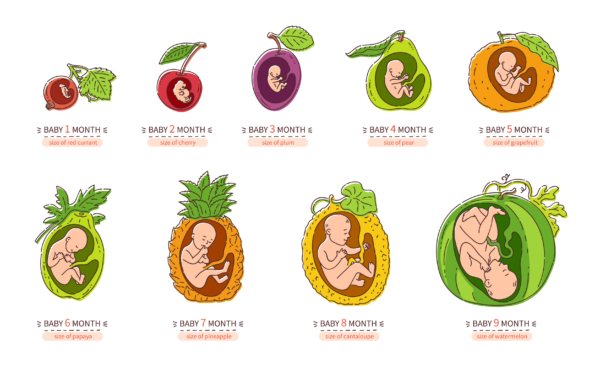
Figure 1: The growth size of a baby developing in the womb (illustration)
Even if the baby's belly isn't very noticeable, it's clear that a life is definitely growing inside.
Many pregnant women experience morning sickness or dizziness in the early stages of pregnancy. This can make standing during your commute difficult. In such cases, don't try to tough it out; prioritize your own and your baby's well-being and sit down. If there's a rest area available, use that as well. Life is precious.
Besides morning sickness and dizziness, let's share some other things that both men and women should know about a pregnant woman's body. Some people may not be able to talk about it, so knowing about it even if you're not directly involved will help you understand. It's important knowledge.
What are morning sickness and hyperemesis gravidarum?
One word that often comes up in relation to pregnancy is "morning sickness," but what exactly is morning sickness?
Morning sickness is characterized by nausea and loss of appetite starting around the time a woman realizes she's pregnant. Usually, the symptoms ease by around 12-15 weeks of pregnancy. However, if morning sickness becomes severe enough to require intravenous fluids or hospitalization, it's called hyperemesis gravidarum. While the main cause is the rapid increase in female hormones in early pregnancy, environmental factors and mental state can also exacerbate the symptoms.
I see. Since everyone's environment and mood are different, morning sickness symptoms also vary from person to person.
Is the stable period really stable?
When I hear about a pregnancy, I sometimes hear things like, "I've entered the stable period," but what exactly is "stable" about this "stable period"?
Generally, the period from 16 weeks of pregnancy onwards is called the "stable period." It's true that the time when early miscarriage is over and morning sickness subsides is around this time. However, "stable period" is not a medical term. Some pregnant women expand their activities, such as traveling long distances, when they reach the "stable period." But premature birth and various pregnancy complications can occur after this, and as a professional, I don't want the term "stable period" to be used lightly. Attention must be paid to the health of both the mother and the fetus at every stage of pregnancy.
What is premature birth?
You might not hear about it often, but I want everyone to know about premature birth.
A miscarriage occurs when a pregnancy ends before 22 weeks, and a premature birth occurs when delivery occurs before 37 weeks. Threatened premature labor is when the uterus contracts and the cervix opens, indicating an imminent risk of premature birth. While infection and rupture of membranes are often involved, individual constitution can also play a role. Although neonatal medicine has advanced, it's still desirable to avoid premature birth whenever possible. Threatened premature labor requires rest and hospitalization, so it's important to pay attention to symptoms and consult with your doctor.
Are there any signs that indicate a baby might be going into premature labor?
In the later stages of pregnancy, it's normal to feel abdominal (uterine) contractions that aren't painful. However, frequent or painful contractions are abnormal and should be monitored carefully. Vaginal bleeding is also something to be wary of.
What is pregnancy-induced hypertension?
My friend was talking about how her doctor told her about weight gain and also about gestational hypertension when she got pregnant. What exactly does that mean?
Pregnancy-induced hypertension is a condition where, in addition to elevated blood pressure during pregnancy, various organ damages occur. While it usually improves after delivery, it's a serious condition that can have adverse effects on both the mother and the fetus if it becomes severe. Women with pre-existing high blood pressure or kidney disease should be especially careful, and obesity and advanced age also increase the risk.
What is anemia during pregnancy?
During pregnancy, circulating plasma volume increases, but the increase in red blood cells can't keep up, so the blood becomes thinner and you usually become anemic. At the same time, your iron requirements increase, so you need to make sure you get enough through a balanced diet.
I don't know how to achieve a good balance.
The Ministry of Health, Labour and Welfare provides information on its website. For example, this ( Ministry of Health, Labour and Welfare's Book on Healthy Body Building and Diet ) is a good resource.
Childbirth and the postpartum period
After childbirth, a woman's body begins to change in an attempt to return to its pre-pregnancy state. For example, the placenta produces a large amount of female hormones during pregnancy, but after childbirth and the expulsion of the placenta, the amount of female hormones in the body decreases rapidly. The heart returns to normal within two weeks postpartum, and the uterus returns to normal within six to eight weeks. The period during which the mother's body returns to its pre-pregnancy state is called the "puerperium."
I'd never really thought about how long it takes to recover after giving birth. I could imagine the uterus returning to its original size after the baby is gone, but I couldn't picture the heart changing that much. Does it really change that much?
It does change. During pregnancy, your heart rate increases because you need blood for both yourself and the baby. This means it will return to the amount needed for just one person.

For those of us who don't experience any physical changes, there are probably other things we can't imagine.
Yes. Sho-kun, can you imagine what life will be like when you start taking care of a baby and breastfeeding, in addition to the changes in your own body?
Hmm...
After giving birth, women must adapt to psychological and social changes.
30% of women experience a mild, temporary depressive state known as "maternity blues" within the first 10 days after giving birth. While this usually resolves on its own, it shouldn't be taken lightly, as it can lead to mental health issues such as postpartum depression that require treatment.
I've heard that newborns don't get much sleep because the feeding intervals are short.
Speaking of breastfeeding, there can be anxieties and problems related to breastfeeding, such as mastitis. One of the causes of mastitis is when breast milk accumulates in the milk ducts. When you return to work, your schedule inevitably takes priority over your work. In such cases, you may not be able to breastfeed or express milk when you want to. If possible, try to express your breast milk by breastfeeding or expressing it, rather than letting it accumulate. If you have any concerns about breastfeeding or breastfeeding, it's a good idea to consult a midwife. There are midwives at the hospital where you gave birth, and some birthing centers also offer postpartum care, including breastfeeding consultations.
How long does breast milk last?
Many mothers gradually reduce breastfeeding (weaning) around the time they start introducing solid foods (around 5 to 6 months old), and as breastfeeding opportunities decrease, milk production tends to decrease as well. However, the timing of weaning varies from person to person. Therefore, the period during which breast milk is produced also varies from person to person.
It's not as simple as saying that secretion stops at a certain point after childbirth. The human body is amazing.
Let's also be aware of minor problems that can occur during pregnancy.
These aren't serious illnesses, but common physical changes that pregnant women experience are called minor troubles. For example, the dizziness I mentioned earlier is one example. In addition, constipation can occur from the early stages of pregnancy. The increased levels of progesterone in early pregnancy suppress bowel movements, and morning sickness also contributes to a decrease in food intake. In late pregnancy, the enlarged uterus compresses the intestines, making constipation more likely.
The area where the baby grows inside the womb is close to the intestines, so it's inevitable that it will have some impact on other internal organs.
Stress urinary incontinence (urine leakage) is not uncommon from the second trimester onward, and it can sometimes be difficult to distinguish from ruptured membranes, so if you're worried, consult your doctor. Calf cramps are also common. There are also various other symptoms, and there are individual differences, so if you have any symptoms that concern you, it's reassuring to know that you can ask your doctor right away.
Even minor problems like that would probably cause trouble while working.
Preconception Care
Now, let me talk about a relatively new concept called "preconception care."
Conception is the act of conceiving, that is, receiving a new life in the womb. Preconception care, on the other hand, is about women and couples facing their lifestyles and health while considering future pregnancies. It applies to men and women of a wide range of ages, from early adolescence to their reproductive years. It covers a broad range of topics, including diet and nutrition, smoking, alcohol, body type (underweight and obesity), cancer prevention, and mental health.
Tobacco and alcohol commercials often say that you should refrain from them during pregnancy.
That's right. Smoking and passive smoking are said to have various adverse effects on human health, pregnancy outcomes, fetal development, and the growth and health of children. It's best for couples to quit smoking. Drinking alcohol during pregnancy can cause low birth weight and congenital abnormalities (such as intellectual disabilities and learning disabilities) in the fetus and infant. Of course, excessive drinking increases the risk, but now there is stricter information being provided than before, stating that there is no safe amount of alcohol or a safe time to drink.
Even if you don't decide on your future plans right now, it doesn't hurt to know about your own body and things to be careful about. And this applies not only to those who are pregnant, but also to their partners.National Center for Child Health and Development, Preconception Care Center To
PreconnoteIt's available online, so I recommend you check it out.
Women's Labor Standards Regulations
My research involves handling chemical substances, so when a junior colleague became pregnant, I started working on a "guide to handling chemical substances."[1]Guidelines for Handling Chemical Substances (2021 Edition, Hokkaido University Safety and Health Headquarters, Hokkaido University Facilities Department) I reread the section on "Women's Labor Standards Regulations (P 29)." I reconfirmed the provisions regarding women's maternal health management and maternity protection.
<Women's Labor Standards Regulations>
The Industrial Safety and Health Act defines the scope of work that restricts employment for pregnant women and postpartum women. It designates 26 chemical substances, including organic solvents, specific chemical substances, and lead, which are already subject to regulation, as these are considered particularly harmful to pregnancy, childbirth, and lactation. The act also prohibits women from working in substandard work environments. It's important to understand these regulations to ensure your own safety and well-being as a worker.
Reference website:Creating a Women-Friendly Workplace that Supports Pregnancy and Childbirth [Special Feature] Expert Column: Considerations for Handling Chemicals for Women Who Want to Be Pregnant or Are Pregnant
To business owners handling chemical substances: Parts of the Women's Labor Standards Regulations will be amended (Ministry of Health, Labour and Welfare leaflet).

Do you work in a laboratory or similar setting?
Yes, I'm working in research and development.
I'm glad to hear that you've carefully read the guidelines for handling chemical substances. When handling chemical substances, some people have vague anxieties about whether they might get sick in the future or whether their children might be affected, but if chemical substances don't enter the body, there will be no health problems. Various laws and regulations are in place for that purpose, and the same approach can be used to prevent harm even with substances that are not regulated. We introduce this way of thinking in our training sessions and guidelines, so I would be happy if you could review them again.
Balancing pregnancy, childbirth, childcare, and work
In accordance with national policy, employers have established leave systems within their employee benefits programs to ensure a safe and secure maternity experience and enable employees to continue working while raising children. There are also systems that can be taken by partners who are raising children together. (Outline of childcare support system at Hokkaido University)[2]An overview of childcare support systems at Hokkaido University(For details and usage information, please contact the Human Resources/Labor Management Department of your affiliated department.)
In the case of Macchan and me, that means I'm the one who can obtain it, right?
That's right. I think it will be helpful as a reference for how to enjoy life with a new family while also having a fulfilling career, so I don't think it's too early to read it now.
Part4 Preconception, pregnancy, childbirth, and employee benefits (Part 2)Continue to.
(Supervised by: Yasuhiko Ebina, Professor, Graduate School of Health Sciences, Hokkaido University)
Footnote